

A Year With Ina: Week 2
Grilled Porterhouse Steak with Rosemary and Fennel & French Bistro Salad

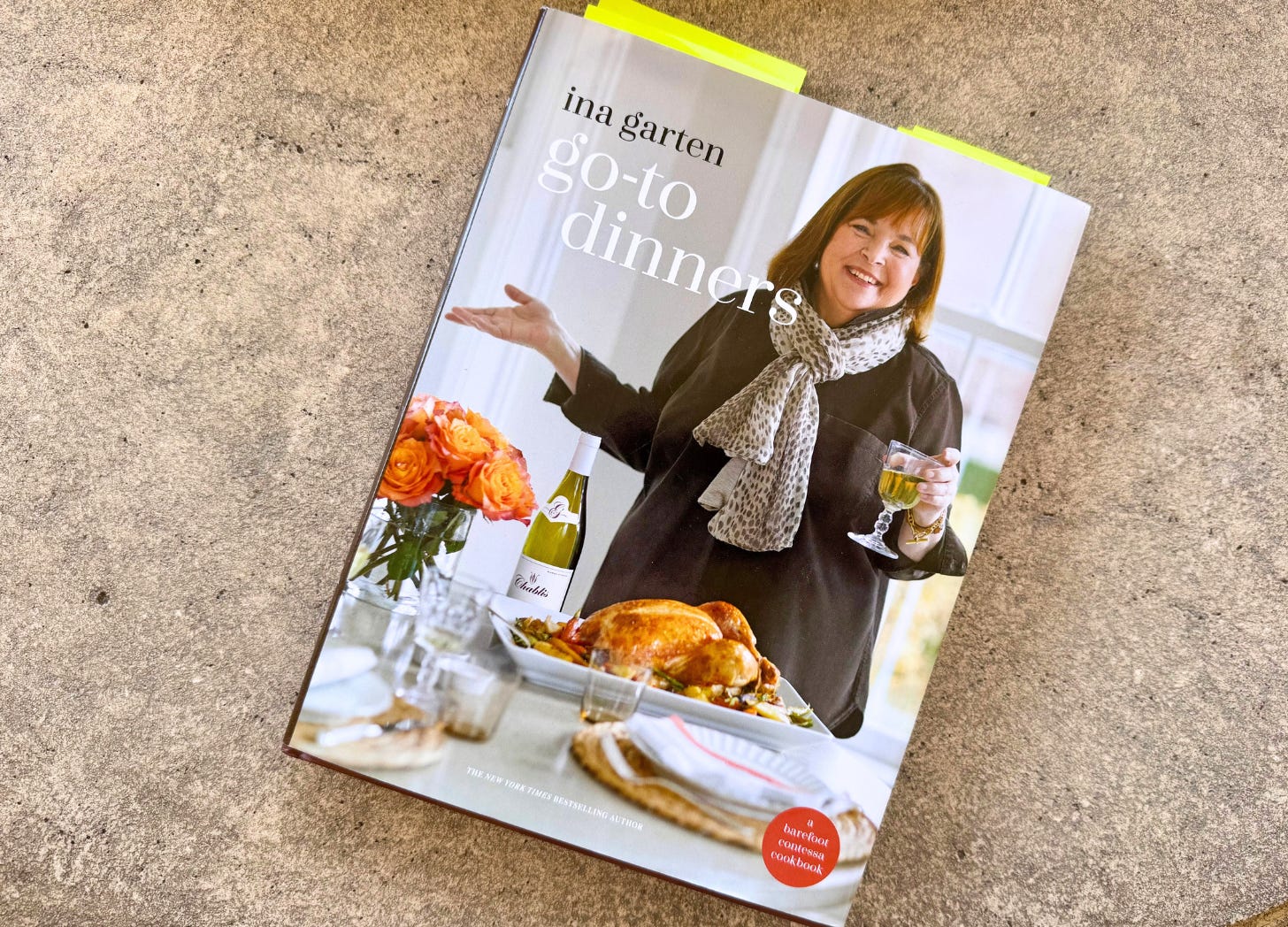
One of the reasons I wanted to spend a year cooking through Go-To Dinners is that Ina Garten’s recipes offer a useful window into what makes home cooking work well in real life.
Not in a restaurant sense. Not in the performative sense that sometimes shows up online. But in the quiet, practical way that actually sustains dinner at home.
Her recipes tend to rely on a simple idea that I find myself returning to again and again: when ingredients are good and the balance is right, the cooking itself does not need to be complicated.
This week I happened to be visiting my mother in law in Florida, which made it the right moment for a dinner that felt slightly celebratory without requiring much effort. We made Grilled Porterhouse Steak with Rosemary and Fennel alongside French Bistro Salad, a pairing that illustrates several of the principles that show up throughout this book.

The Meal
The steak is straightforward. A thick porterhouse is grilled and then brushed with a warm herb oil made from garlic, rosemary, and fennel.
The salad moves in the opposite direction. Radicchio and endive bring bitterness, apples add crisp sweetness, Roquefort contributes richness, and caramelized walnuts provide both texture and a little sugar.
Together they create the kind of meal that feels generous without feeling elaborate, which is often the sweet spot for cooking at home.
Steak sliced on a cutting board.
A large bowl of salad placed in the center of the table.
Everyone helping themselves.
There is nothing complicated about it, but it feels complete.


What Makes the Recipe Work
The interesting idea in the steak recipe is not the grilling itself. Anyone who cooks regularly already knows how to grill a good steak.
The insight is the herb oil.
Garlic is gently warmed in olive oil before rosemary and fennel are added, and the mixture is brushed over the meat as it rests. It is a small step, but it deepens the flavor in a way that feels deliberate rather than heavy handed.
This is something Ina does often. She takes a very simple dish and introduces one thoughtful detail that brings the entire recipe into focus.
The salad follows the same logic. Nothing about the ingredients is unusual, but the balance between bitter greens, sweet apples, sharp cheese, and crunchy walnuts makes the whole thing feel more interesting than any single element would on its own.
Memorable meals are often built on balance rather than complexity.
What This Teaches About Cooking at Home
Cooking through these recipes is already reinforcing something that many experienced home cooks eventually discover.
The meals people remember rarely come from the most elaborate dishes.
They come from meals where the ingredients make sense together, the flavors are balanced, and the cook has taken the time to finish the dish thoughtfully.
In other words, the food does not need to be complicated to feel considered.
Simple ingredients, handled with intention, almost always outperform complexity.
How It Fits Into Real Life
A porterhouse steak is probably not something most of us are cooking on a typical Tuesday night. It is a generous cut of meat and feels more at home on a weekend or when people are gathered.
But the technique is the useful part.
That same herb oil would work beautifully on other cuts of steak, grilled chicken, or even roasted vegetables. Once you start noticing these small finishing elements, they become easy ways to elevate very simple meals.
The salad, on the other hand, is something I could see making often. It is quick to assemble, interesting enough for guests, and substantial enough to sit comfortably next to almost any main dish.

One of the things I appreciate about cooking from older cookbooks is the way they assume a certain kind of dinner table.
Not one designed for photographs, but one designed for people.
Food placed in the middle of the table.
Everyone serving themselves.
Conversation that stretches a little longer than planned.
The recipes in Go-To Dinners tend to support that kind of meal, which may be the real reason they continue to resonate with home cooks.
Because in the end, the goal is not just to cook well.
It’s to feed people well.
